Commercial Roofing in Nashville, TN
Nashville Roof Master keeps low-slope commercial rooftops watertight by chasing the leak back to the seam, the flashing, or the roof deck before it reaches your tenants. We survey the membrane, the insulation, and the drains, then put the repair or replacement in writing — call 6156160840 for a free estimate and financing options. Commercial roofing here means TPO, EPDM, and modified bitumen systems rated for Middle Tennessee hail and summer UV, and we bring that same care to residential roofing on the same street.
Call 6156160840What Commercial Roofing Involves on a Low-Slope Building
Commercial roofing is the waterproofing of a flat or low-slope assembly, where water sits instead of running off. On a house, gravity does half the work. On a rooftop, every seam and penetration carries the full load. That is why we survey before we quote.
The Layers We Check Before Anything Gets Replaced
- Roof deck and substrate: we inspect plywood, OSB, and concrete decking for rot and delamination before a new sheet goes down.
- Insulation: polyiso board adds R-value and blocks the condensation that wicks downward and feeds mold above ceiling tiles.
- Membrane: the waterproofing sheet itself is the layer that decides whether tenants stay dry through a July thunderstorm.
- Flashing: step flashing, counter-flashing, chimney flashing, pipe flashing, apron flashing, and boot flashing at every penetration.
- Drainage: scuppers, gutters, and downspouts sized so storm water never ponds 48 hours after the rain stops.
Ventilation matters as much as waterproofing. A rooftop with no intake and exhaust balance traps humid air under the insulation, and that moisture erodes the deck from the inside out.
Membrane and System Choices for Middle Tennessee Buildings
System selection is the first real decision, and it should follow the building rather than a sales sheet. We quote two assemblies on most roof estimates so you can weigh cost against service life.
- TPO single-ply at 60-mil reinforced is the workhorse on local warehouses; a Firestone UltraPly TPO sheet reflects summer sun and resists the UV that flakes and oxidizes thinner membranes.
- EPDM 60-mil fully adhered, such as Firestone RubberGard, suits buildings with heavy rooftop traffic and tolerates freeze-thaw movement at the flashing seals.
- Modified bitumen SBS cap sheet, like GAF Liberty SBS, can be torched or set in self-adhered adhesive and takes a reflective coating well after ten years.
- PVC membrane belongs over commercial kitchens, where cooking grease degrades TPO and EPDM faster than sunlight does.
- Built-up roofing (BUR) made from roofing felt, bitumen, and tar paper still covers plenty of older rooftops, and it can often be recovered instead of torn off.
- Standing-seam panel, corrugated panel, and R-panel metal go on steeper sections, canopies, awnings, and mansard or gambrel rooflines.
We install systems from Carlisle SynTec, GAF EverGuard, Johns Manville, and Versico alongside Firestone. NDL warranty terms run 15 to 30 years, and the length depends on the whole assembly, not the top sheet alone.
What Commercial Roofing Costs in Nashville
Cost tracks square footage, tear-off, and whether the insulation is wet. Wet insulation usually forces a full removal, because trapped moisture rots the deck underneath and no coating will stop it.
- Membrane repair or a resealed flashing detail: a few hundred dollars up to roughly $2,500 per visit.
- Reflective roof coating over sound modified bitumen or BUR: often $1.50 to $3.00 per square foot.
- TPO or EPDM recover over dry existing insulation: roughly $4 to $8 per square foot.
- Full tear-off with new insulation and membrane: roughly $8 to $15 per square foot.
- Metal panel retrofit over new purlins, battens, and counterbattens: typically $9 to $18 per square foot.
- Structural work — a sistered rafter, a truss repair, or joist work — is quoted separately after an engineer reviews the drawings.
Financing spreads a capital project across budget cycles so one line item does not wreck your operating account. Ask about terms when you request the estimate.
How a Membrane Fails, and What It Looks Like From Below
Membrane failure is a process, not an event. Water seeps at a seam, wicks along the deck, and erodes the insulation long before a ceiling tile drops.
- Ponding water still standing 48 hours after rain points to a drainage or slope problem, not just a dirty roof.
- Blistering and alligatoring on the membrane surface mean the sheet has delaminated from the substrate below.
- Cracks or splits at seams open up as thermal cycling pushes the assembly through expansion and contraction.
- Interior ceiling water stains usually trace back to a pipe boot, vent boot, or drain bowl several feet away.
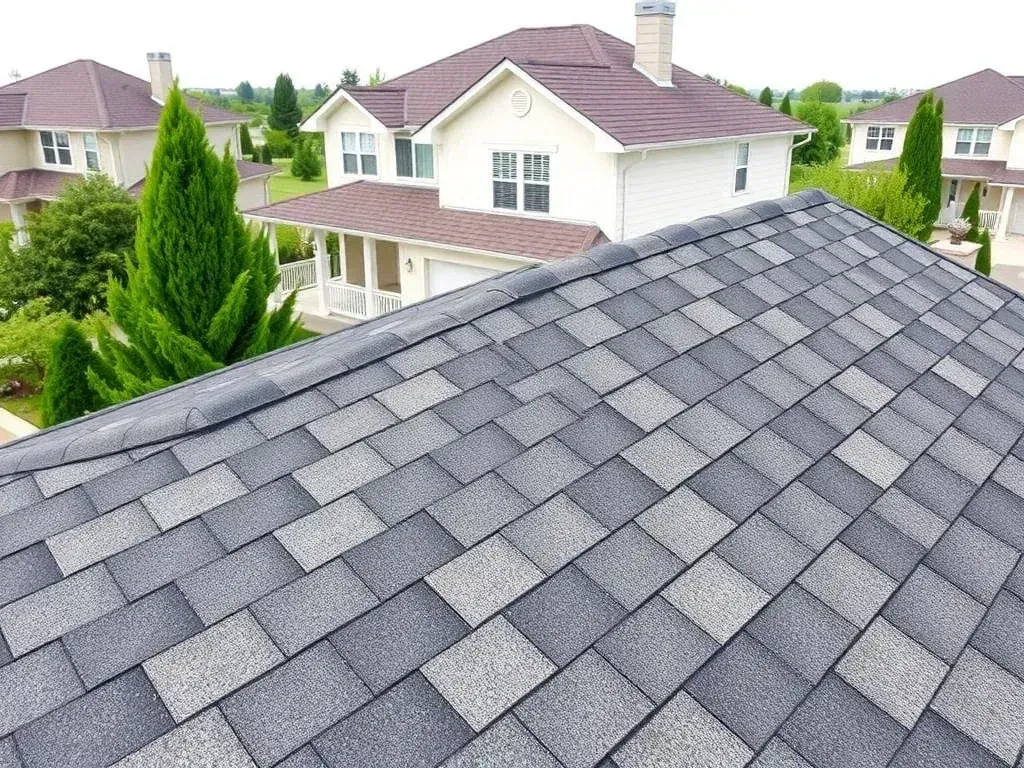
- Granule loss on any shingled section exposes the asphalt to UV, and the shingle then curls and buckles.
- Soft spots underfoot point to decay in the decking, which is not something you can caulk over.
Our Commercial Roofing Process, Step by Step
- Roof asset survey. We photograph every field, seam, edge, and penetration, then score the roof section by section.
- Written line-item estimate. One bid, plain numbers: tear-off or recover, materials, labor, dumpster, and permits.
- Tenant and schedule coordination. We stage material delivery so your tenants keep parking and loading access.
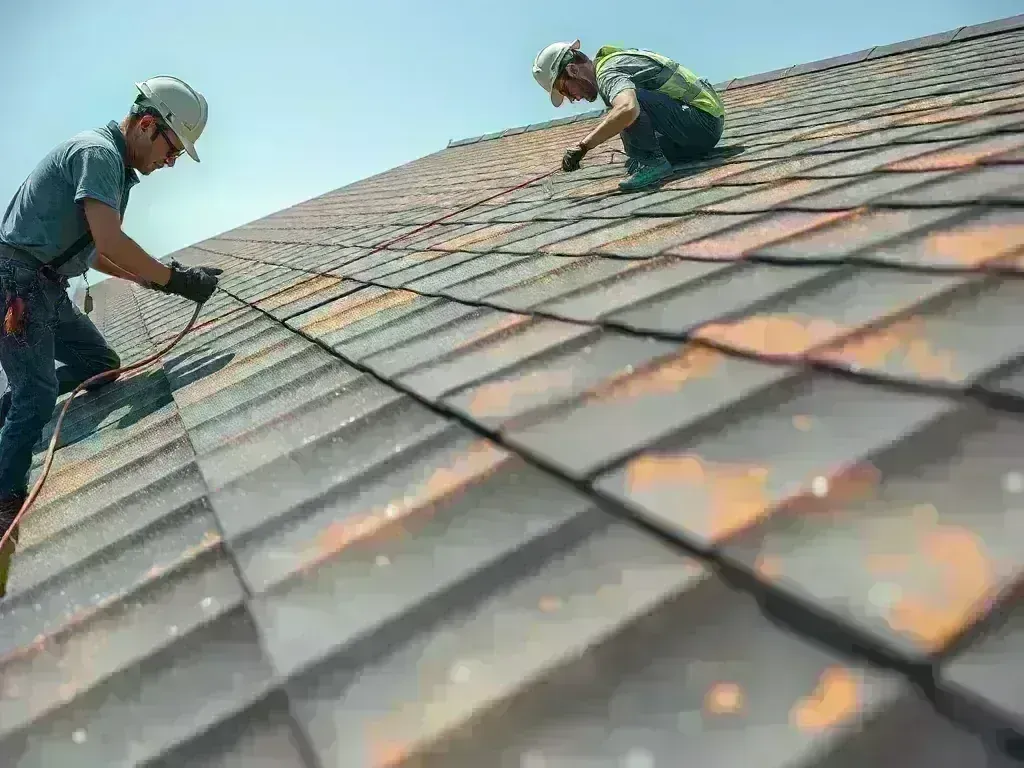
- Removal and deck repair. Crews on scaffold with a safety harness and anchor points strip the membrane and replace rotted sheathing.
- Installation. New insulation, membrane, flashing, sealant, and caulk, with screws and fasteners set to spec rather than overdriven.
- Inspection, cleanup, and warranty paperwork. We walk the roof, sweep for debris, and hand over the warranty documents.
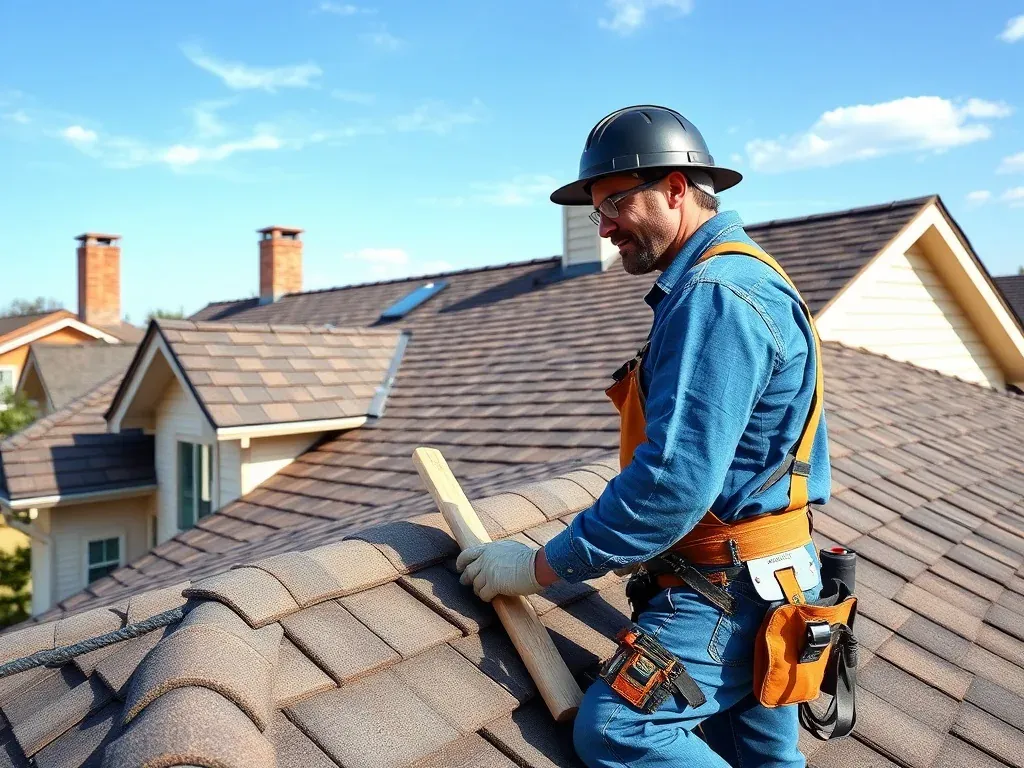
Our crews carry the standard kit — pry bar, roofing shovel, nail gun, air compressor, roofing square, and ladder — plus a torch for modified bitumen where a heat weld is specified.
Pitched Sections, Skylights, and Mixed-Use Buildings
Plenty of Middle Tennessee commercial buildings are not flat everywhere. A mansard, a gable end, or a small overhang brings pitched roofing into the scope, and those details fail differently.
- Underlayment and synthetic underlayment sit under the finished roof, and ice-and-water shield runs along the eave wherever ice dam risk exists.
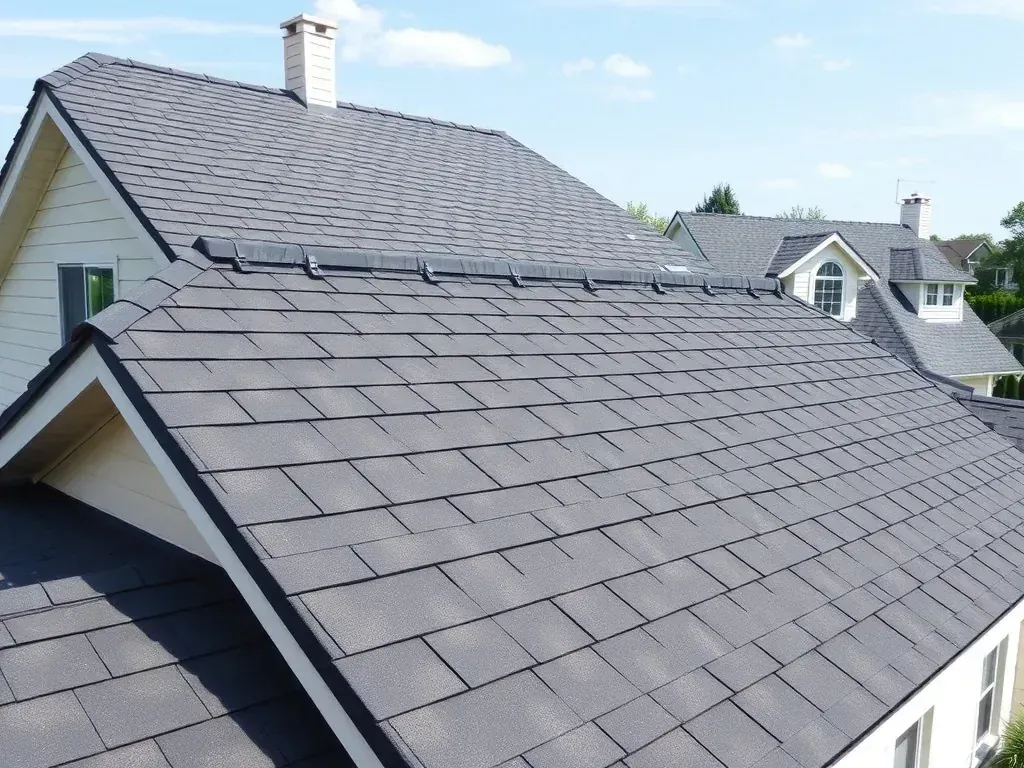
- Shingles on a pitched section — asphalt shingle, architectural shingle, or three-tab shingle — need the correct fastener length so the field course holds in wind.
- Ridge cap, ridge vent, soffit vent, and attic fan work together to move hot attic air out before it cooks the insulation.
- Drip edge protects the eave and rake, while fascia and soffit keep water off the wall below.
- Valleys, hip and ridge lines, and the verge all need metal, because that is where wind uplift shows up first.
- Skylight, dormer, and chimney penetrations get a dedicated flashing kit plus roof cement where a caulk joint alone would peel.
- Wood shake, cedar shake, slate, clay tile, and concrete tile appear on older buildings, and each needs its own fastening schedule.
Every one of those materials has a different pitch limit, a different snow guard requirement, and a different repair approach.
Insurance Claims, Code Compliance, and Warranties
Storm damage claims move faster when the paperwork is specific. A roofing contractor who documents the storm date, photographs the hail damage, and meets the adjuster on the roof gets a cleaner scope than one who mails an invoice.
- We document wind uplift and impact damage with dated photos, then build a line-item estimate that matches the insurance scope.
- We can attend the adjuster inspection and submit a supplemental claim if the first scope misses decking or insulation.
- Building code compliance matters most at the parapet and coping, where wind uplift pressure peaks during a severe thunderstorm.
- Vapor barrier placement, mastic at terminations, and weatherproofing at every curb keep the waterproofing system continuous.
- Warranty terms are stated in writing before work starts, and we never promise coverage the manufacturer will not back.
We do not do structural engineering in house. When a load change needs a stamped drawing, we say so instead of guessing. No roofer should quote a commercial recover without moisture readings first.
Middle Tennessee Climate and Your Roof
Local weather decides which failures you see first. Hot, humid summers push UV intensity high, and that is what degrades a non-reflective single-ply membrane fastest.
- Spring hail and severe thunderstorms bruise shingles and dent metal, and the damage often hides until the next hard rain.
- Wind uplift testing matters at the perimeter and corners, where gusts peel back an under-fastened field course.
- High humidity accelerates mold under wet insulation, which is why we check moisture content and not just the surface.
- Freeze-thaw cycles in January and February crack flashing seals and open old caulk joints at counter-flashing.
- Winter ice storms and occasional snow load add weight to canopies, awnings, and any overhang never designed for it.
- Summer attic heat drags energy efficiency down, so a reflective coating or a white TPO sheet pays back on cooling cost.
Sustainability in roofing comes down to service life. Reflective membranes, recover instead of tear-off, and membrane recycling keep material out of the landfill. Green roofing — a planted assembly or a reflective one — starts with the same question: can the structure carry it?
What's Included
- A full roof asset survey with dated photos of every seam, penetration, and drainage point.
- Moisture readings through the insulation so we know whether a recover is honest or a bandage.
- Your choice of TPO, EPDM, PVC membrane, or modified bitumen cap sheet, quoted as two comparable assemblies.
- Tear-off and dumpster hauling, or a recover over sound existing membrane where code allows.
- New flashing, sealant, mastic, and caulk at curbs, drains, and the parapet edge.
- Deck repair including plywood or OSB sheathing replacement and fasteners set to spec.
- Scaffold, safety harness, and anchor staging with tenant parking and delivery coordination.
- Written warranty documents and a final walk-through before we sweep the debris.
Our Commercial Roofing Process
- Roof inspection and asset survey: we walk the rooftop, photograph each field and detail, and take moisture readings through the insulation to locate wet board.
- Written roof estimate: you get two system options with square footage, tear-off or recover scope, material list, dumpster, and permit costs spelled out line by line.
- Scheduling and tenant coordination: we confirm delivery windows, place the dumpster, and protect entries so your building keeps operating during the work.
- Removal and deck repair: crews on scaffold strip the old membrane, replace rotted sheathing, and confirm the roof deck is sound before new insulation goes down.
- Installation: membrane, flashing, sealant, and drainage details are installed to the manufacturer's specification, with fasteners set to depth rather than overdriven.
- Final inspection and handoff: we test drainage, sweep for debris, and deliver warranty paperwork plus photos of the finished assembly.
Signs You Need Commercial Roofing
Signs Your Middle Tennessee Rooftop Needs Commercial Roofing Work
- Interior ceiling water stains that reappear after every hard rain, which usually trace back to a seam or a pipe boot.
- Blistering or bubbling on the membrane surface, a sign the sheet has delaminated from the substrate.
- Standing water still on the roof 48 hours after rain, which points to a blocked scupper or a lost slope.
- Visible cracks or splits at seams, where thermal cycling has pushed the assembly past its expansion limit.
- Soft or spongy spots underfoot, which mean decay in the roof deck rather than a surface problem.
- Granule loss and exposed asphalt on any shingled section, the first stage of end-of-life wear.
- Rust streaks or corrosion at fasteners and metal edges after a spring hail or thunderstorm season.
- Mold or damp insulation found during a routine roof inspection, which means water has been wicking for months.
Don't just take our word for it — hear from our satisfied customers.
"Our warehouse roof off the Cumberland River had ponding water every storm. Nashville Roof Master surveyed it, showed me photos of the failed seams, and quoted a TPO recover with two pricing options. They staged the dumpster so our loading dock never closed." — Marcus T., East Nashville
"We manage a mixed-use building in The Gulch with a flat section and a shingled mansard. They handled the modified bitumen and the shingles in one scope, and the ceiling stains in two retail units stopped after the first rain." — Dana R., The Gulch
"Hail took out our rooftop units and dented the metal panels over the entry. Their crew documented everything for the adjuster and met him on the roof. The supplemental claim covered the wet insulation the first scope missed." — Priya S., Donelson
Ready to get started? Call us today at 6156160840 for a free estimate.
Free estimates · Licensed & Insured certified · up to 50-year warranty
Call 6156160840